01 · Synthetic Data · Computer Vision · In Development

Calibrate the model
against the world.

Synthetic training data and model development for agricultural robotics. Build for the conditions that matter. Measure the result.

Build
Procedural training scenes
Label
Renderer-derived annotations
Train
Task-specific model development
Evaluate
Results against an agreed baseline
See the data
behind the images.

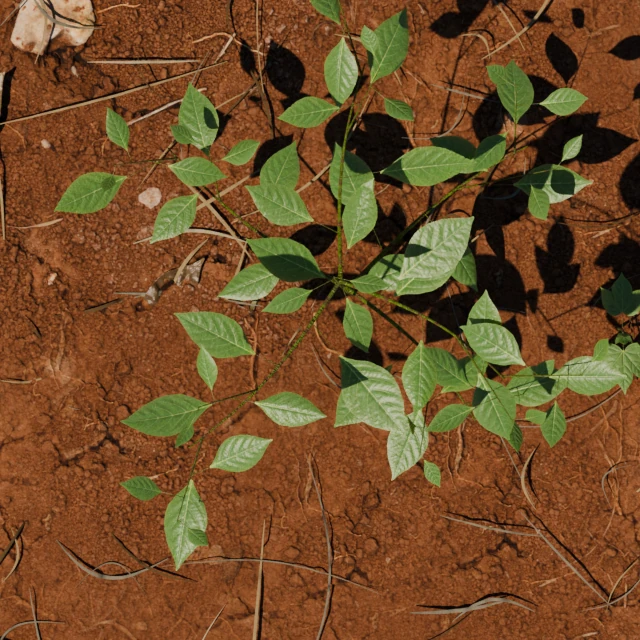
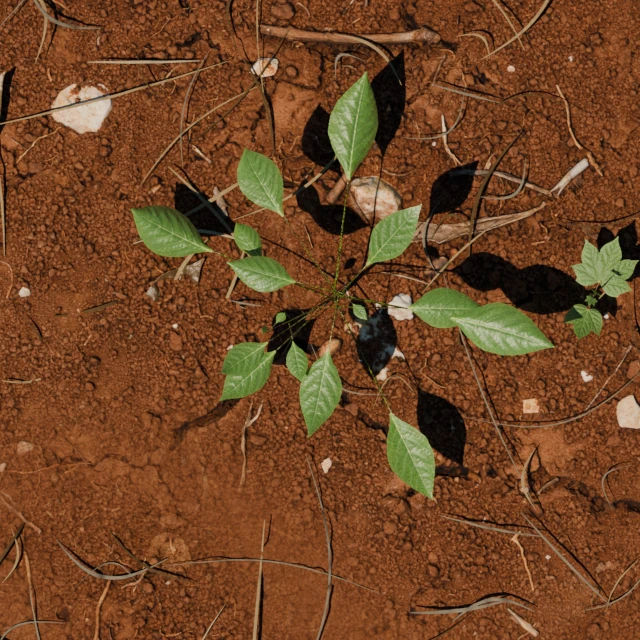
Explore synthetic plant imagery with matching detection boxes and visible plant masks. Inspect the labels, then try a 100-image sample in your own pipeline.

Explore the sample →

Cotton context · Palmer labels · Free evaluation download

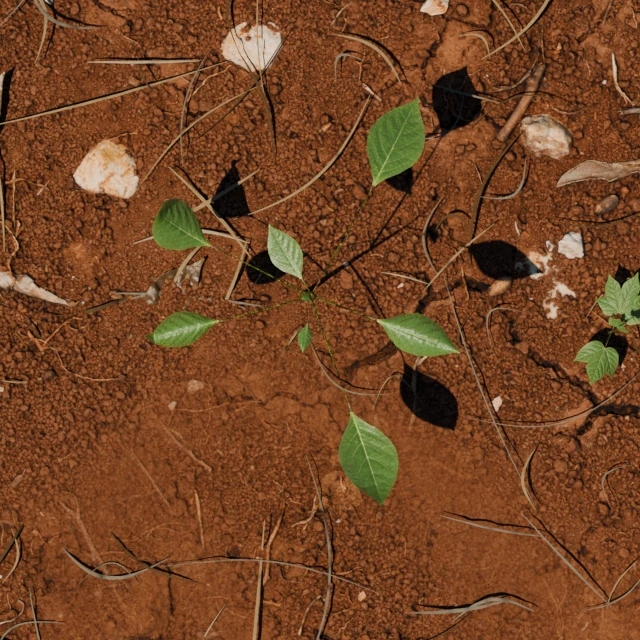
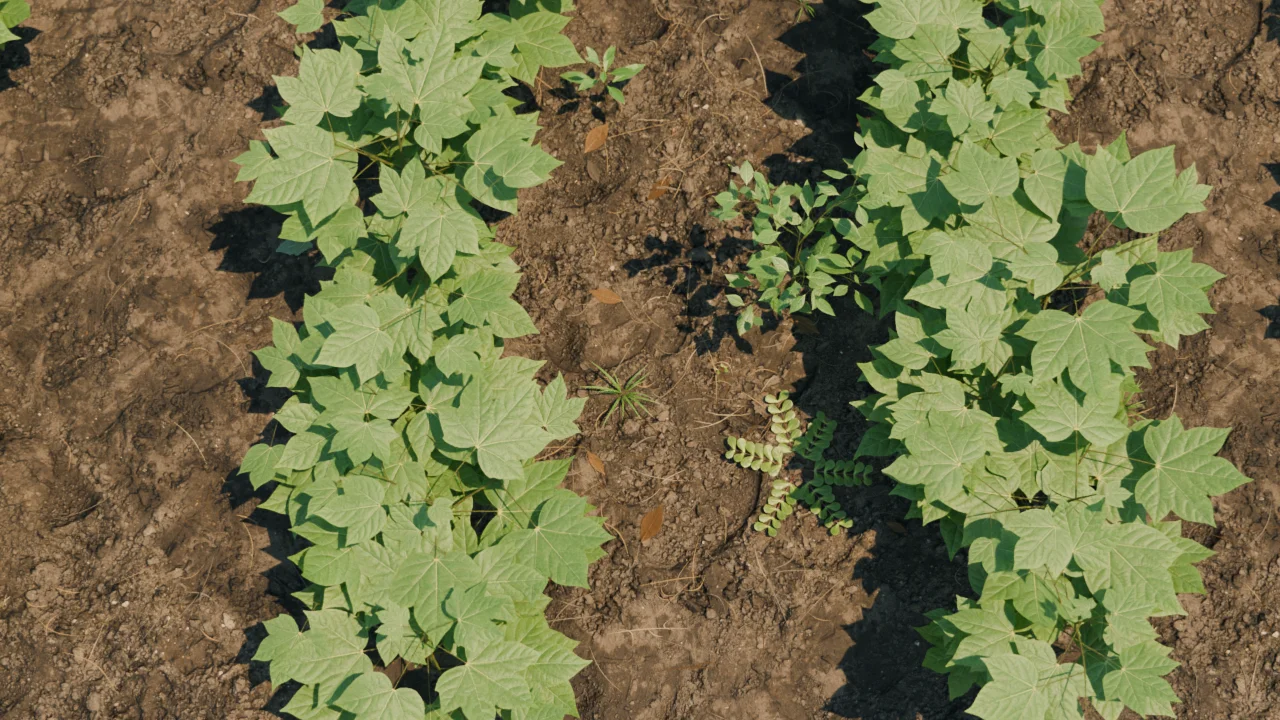
Early-vegetative Palmer amaranth in a rendered cotton scene
Full canopy
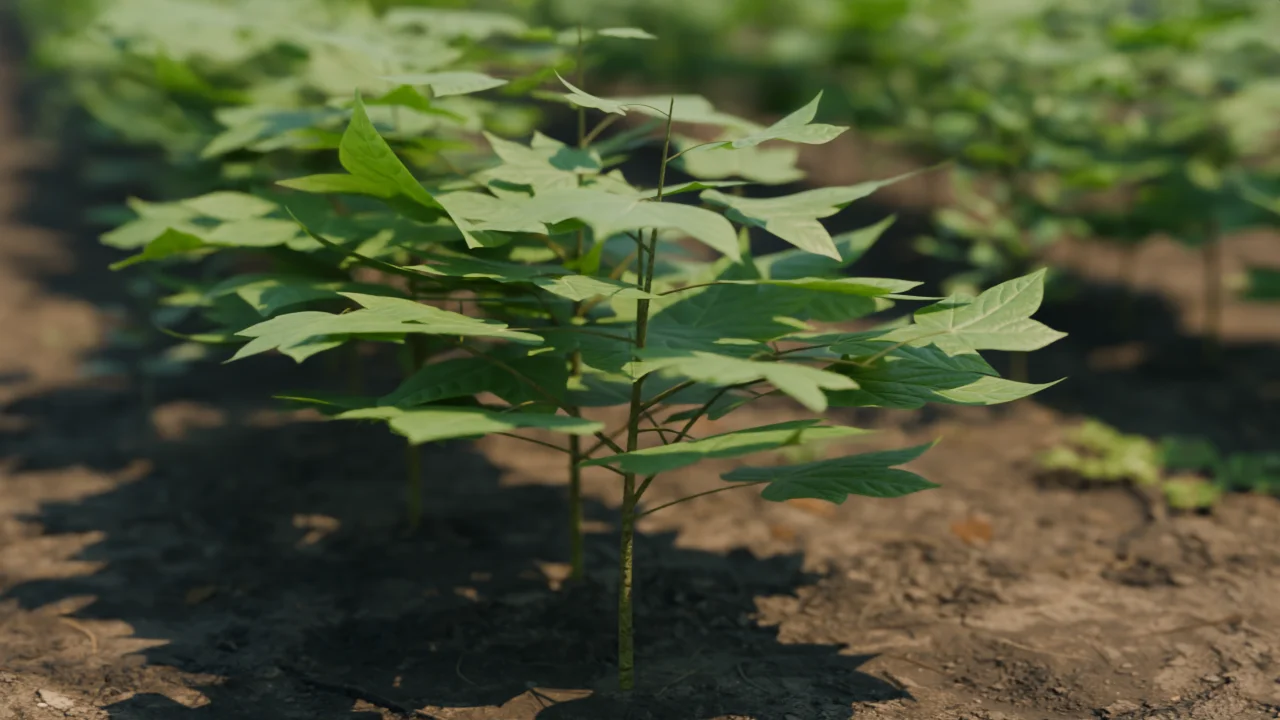
Juvenile Palmer amaranth with separated leaves
Young plant
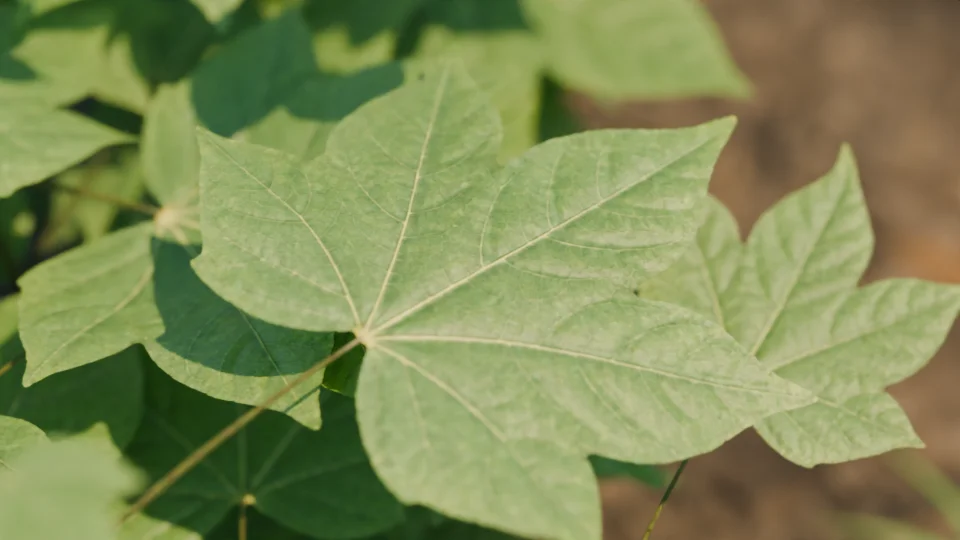
Separated leaves on a generated Palmer plant
Leaf detail
02 · How it works

The robot sees what
you teach it to see.

01
Define the task
We agree on the crop, target, camera setup and conditions your model needs to handle. Scope and evaluation criteria come first.
02
Build the training data
Procedural scenes generate images and labels together. We check their quality and vary the conditions relevant to the agreed task.
03
Train and evaluate
We compare model candidates against an agreed baseline on real evaluation images, recording improvements, misses and false positives.
04
Plan the handoff
Review the results with your team. Model delivery, supported hardware and further development are agreed once feasibility and deployment requirements are established.
Inside a generated scene

The details
make the world.

Light across a leaf. A change in focus. The small variations that give a scene its character.

Cotton · procedural scene
03 · Working with BASELINE

Built around your pipeline.

PLANNED PILOT WORKFLOW
 
01   One agreed detection task
02   A defined monthly work plan
03   Training and evaluation
04   Results and next steps

We’re developing a workflow for focused model-development projects. Future pilots will have an agreed scope, schedule and evaluation criteria. We’re collecting interest while we improve and validate the models.

  • Synthetic training data for supported tasks
  • Model comparisons and example predictions
  • Documented settings and known limitations
  • A review of the next development or deployment step

Customer model delivery is not yet available. Accuracy, supported hardware and licensing must be established before we offer a handoff.

04 · Texas crop roadmap

Built for the crops
that feed the region.

Eleven plant categories are built, each with a specimen scene and a planted plot, twelve geometries across three growth stages, and twenty-four leaf textures. Detection results exist for Palmer amaranth in cotton, and earlier wheat work tested synthetic-only transfer against a public field benchmark. A library asset is not a validated detector — every new task needs its own feasibility review and evaluation before we offer a model.

Measured results
Cotton & Palmer amaranth
Gossypium hirsutum · Amaranthus palmeri
Procedural scenes, detection experiments and a recorded evaluation
Earlier proof point
Wheat
Triticum aestivum
Synthetic-only transfer tested against a public field benchmark
Library built · not yet validated
Row & vegetable crops
Corn · Soybean · Romaine · Broccoli · Onion
Specimen and plot scenes across three stages. No detection results yet.
Library built · not yet validated
Broadleaf weeds
Waterhemp · Lambsquarters · Purslane
Amaranthus tuberculatus · Chenopodium album · Portulaca oleracea
Library built · not yet validated
Grass & ground cover
Generic grass · procedural ground materials
Scene context and background variation for the categories above
05 · How to start

Start with a diagnostic.

Before anyone buys training data, the useful question is where the current model actually fails. Most perception gaps are not a data-volume problem — they are a resolution, size-threshold or stage-coverage problem, and those are measurable. We reproduce your baseline on your own images, measure where it misses, and tell you what would close the gap — including when the answer is that you don’t need us. Both engagements are scoped to the problem; we agree cost and schedule on the call, before any work starts.

A model for your camera
Scoped
Priced per engagement, after the diagnostic
  • Training scenes generated to match your camera’s optics and working distance
  • A detector trained on that data plus your own imagery
  • Model handoff is agreed per engagement. Licensing, supported hardware and deployment rights are settled in writing before any delivery.
  • The evaluation showing exactly where it still fails, at a fixed operating point
  • The reproduction configuration, so your team can verify every number
  • Camera matching starts from your measured intrinsics and an agreed calibration check
Discuss Your Crop

An unfavourable result is a completed diagnostic. If the finding is that your existing pipeline is near its ceiling, or that a configuration change gets you most of the way, that is the deliverable and the engagement ends there. We do not hand over the generator itself — you get the model, the data and the evidence. Start a conversation →

06 · Request a Diagnostic

Request a diagnostic.

Tell us the crop, the camera, and the failure you already know about. If it isn’t a fit, we’ll say so on the first call. Our own models are still being improved and validated; we will show you what they do and do not do before anything is agreed.

Your images stay yours. We use them only for the evaluation we agree in writing, and we delete them on request. We use these details to respond to your inquiry; form submissions are processed by Formspree. Please do not send imagery or confidential information through this form.

Ground truth
for the systems
that have to be right.

From generated scenes to measured results — built so model-development decisions can be checked.

Request a Diagnostic →